There’s a moment that happens when you’re standing somewhere real.
Not looking at it through a lens. Not thinking about how to capture it. Just standing there.
For me, this painting started that way.
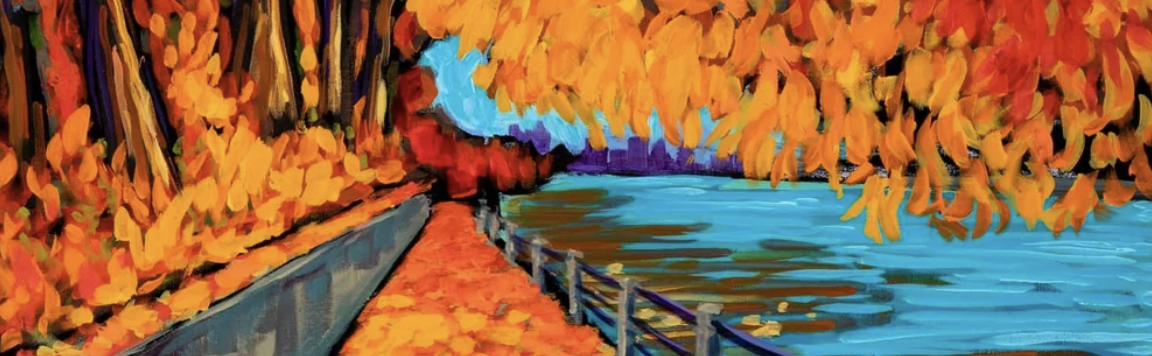
I was working on a new series for an upcoming show when I stepped out for what I thought would be a quick walk. That 20-minute break turned into almost two hours along the Rideau Canal. The kind of walk where you’re not really going anywhere you’re just taking it in.
I came back with pockets full of brilliant orange leaves and the feeling that fall in Ottawa had somehow paused itself. Like the colours were suspended in time just long enough for us to really see them.
Back in the studio, I did what most artists do when something real hits.
I pushed everything else aside and started this instead.
Not What It Looks Like
Most landscape painting starts with observation.
What does the scene look like?
What colours are actually there?
How do I recreate this accurately?
That approach makes sense. It’s how we’re taught.
But somewhere along the way, I realized that accuracy wasn’t what I was after.
Because when I looked back at a place I had painted perfectly, it didn’t feel like being there.
It felt like a record. Not an experience.
What It Feels Like to Be There
The shift for me was simple, but it changed everything.
Instead of asking:
“What does this look like?”
I started asking:
“What does this feel like?”
That question opens up different decisions.
Colour becomes expressive, not literal
Shapes simplify, instead of describing every detail
Lines get stronger, more deliberate
Movement starts to matter as much as composition
I’m no longer trying to recreate the place.
I’m trying to recreate the experience of being in it.
Defining a Sense of Place
If I had to put it simply:
A sense of place is the emotional memory of being somewhere not the visual record of it.
It’s what stays with you after you leave.
It’s why two people can stand in the same location and walk away with completely different impressions.
That’s the space I’m working in.
How It Shows Up in the Work
In practice, this means letting go of certain expectations.
I push colour further than what’s “real” because that’s often closer to what it felt like.
I flatten and simplify forms because detail can sometimes dilute the impact.
I use strong lines and bold structure to hold the energy of a scene together.
And I move quickly, because overworking a painting tends to remove the very thing I’m trying to capture.
The goal isn’t perfection.
It’s presence.
Why It Matters
When someone connects with a painting, it’s rarely because it’s accurate.
It’s because it reminds them of something.
A place they’ve been.
A moment they’ve had.
A feeling they recognize but can’t quite name.
That’s where the work becomes personal.
That’s also where it becomes valuable.
Because it’s no longer just about the place I painted—it’s about the place they remember.
Back to the Beginning
Every painting starts the same way.
Standing somewhere.
Paying attention.
Letting something land.
And then trying, in the studio, to hold onto that long enough to translate it into paint.
Not as it looked.
But as it felt.
This piece—Fall Canal Walk—came from one of those moments.
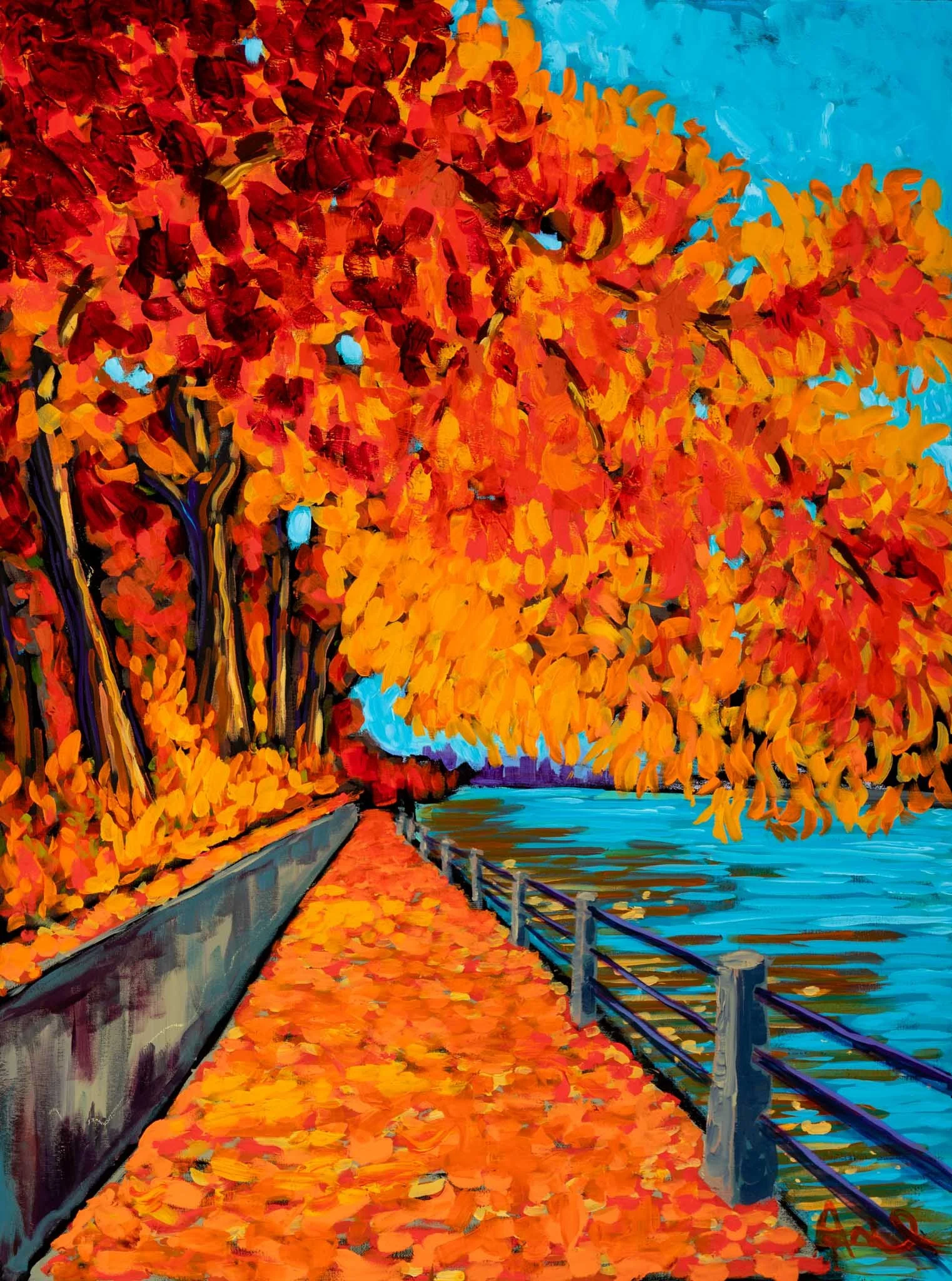
Fall Rideau Canal Walk — The Glebe, Ottawa Series
30 × 40 inches · Acrylic on canvas
A walk that wasn’t planned.
A pause that wasn’t expected.
A feeling that stayed longer than it should have.
If you’ve ever experienced that
you already understand what I’m trying to paint.
Andrew