I first learned about David Milne the way a lot of kids learn about artists by accident. Back in grade school, my art teachers would constantly call me David instead of Andrew. It happened so often that eventually, I had to figure out who this other Milne was. What I found was an artist whose work resonated with me in a way I didn’t expect.
Milne’s line work was the first thing that caught my attention. There’s a precision to it, a confidence that feels effortless. He had this ability to define space with just a few strokes, leaving enough out to let the viewer’s eye do the work. That economy of detail fascinated me then and still does now. His approach to contrast bold yet restrained was another thing that pulled me in. He could carve out entire landscapes with just a handful of lines and carefully chosen colors, making every mark matter.
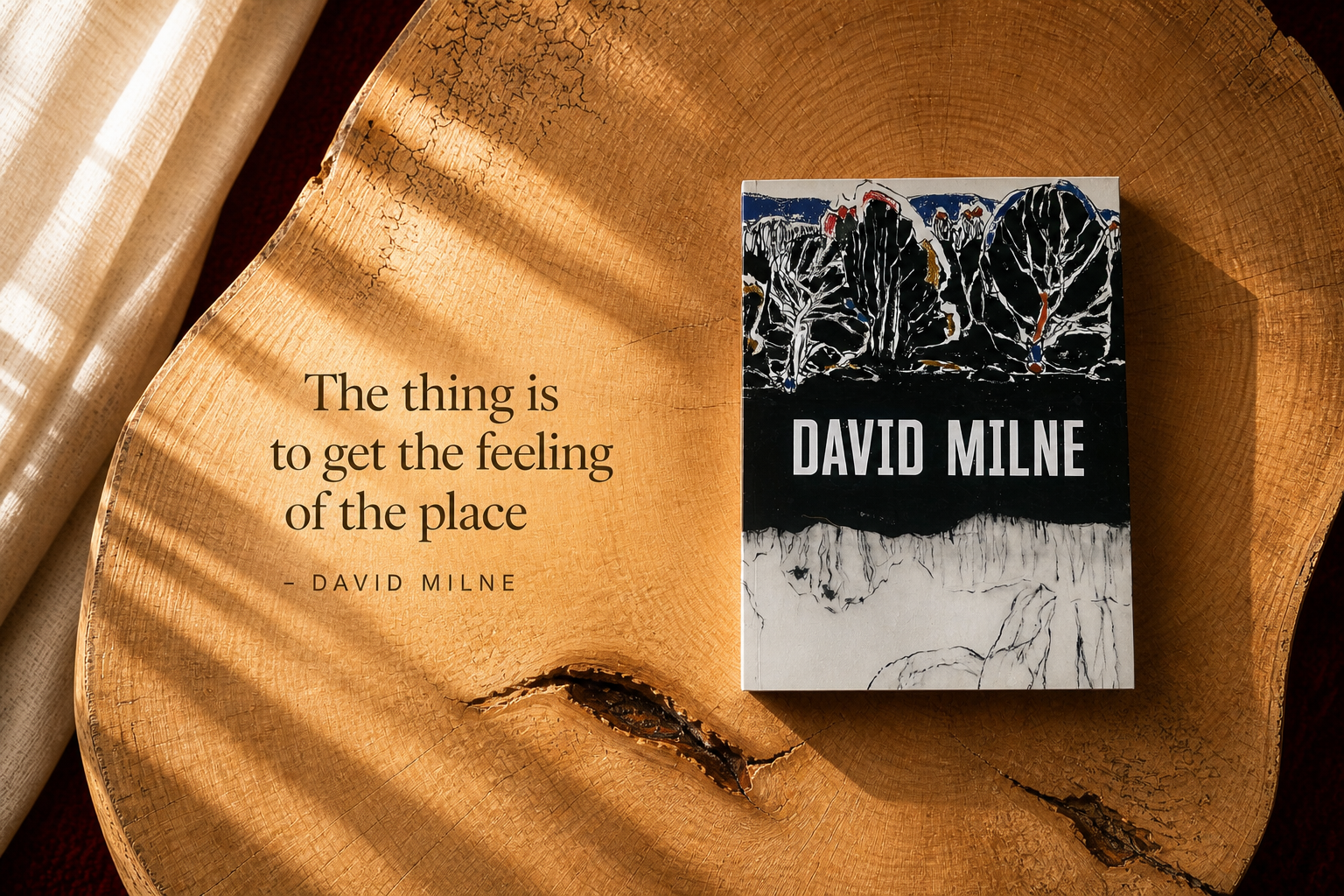
“The thing is to get the feeling of the place.” - David Milne
And then, of course, there were the landscapes themselves. Like me, Milne was drawn to nature. His time spent in Algonquin Park sketching and painting its landscapes is something I deeply relate to. Algonquin has been a source of inspiration for so many artists, including the Group of Seven, and it’s a place where I find myself returning again and again. There’s something about the stillness of the lakes, the ruggedness of the trees, and the way the light filters through the forest that speaks to artists in a way few places can. Milne’s ability to capture the essence of Algonquin its quiet, meditative presence was something special.
But while I admired his technique, there was always one major difference between us tone. Milne’s work leans into the quiet, sometimes even the bleak. There’s a sparseness, a restraint, a kind of loneliness in his paintings. My work, on the other hand, is driven by color, movement, and big, expressive brushstrokes. Where he found meaning in muted tones and empty spaces, I find energy in saturation and bold gestures.
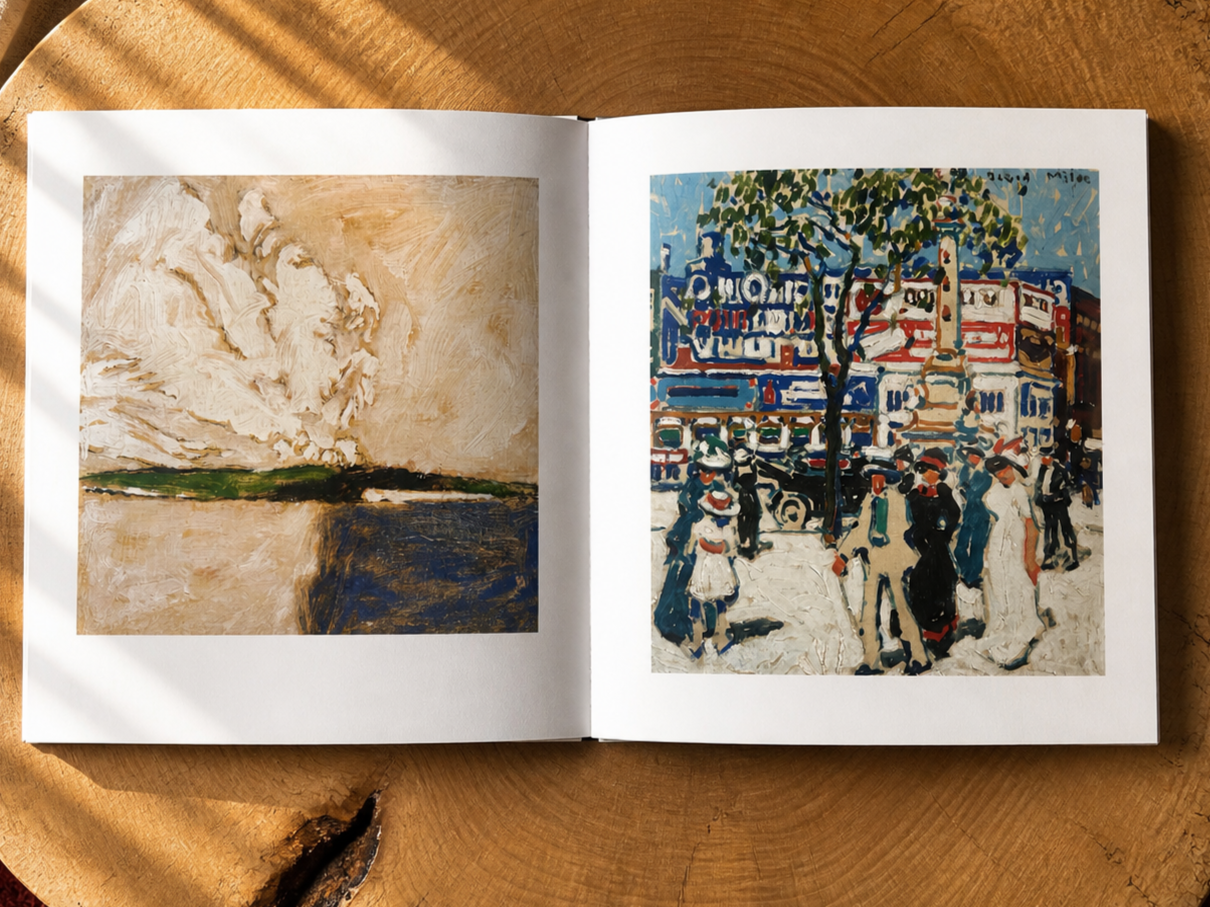
“Nature is not static, but the artist must select and hold.” - David Milne
Sometimes I wonder if this difference comes down to the times we were born into. Milne painted through war and depression, his world shaped by hardship and isolation. I came into a different era one where color feels like a necessity, where expression has room to be loud. We’re all products of our environment, and that inevitably seeps into the way we see and interpret the world.
But even with our differences, I still feel a connection to his work. There’s something about discovering an artist who shares your instincts even if they take them in a different direction that makes you feel a little more understood. And for that, I’ll always be grateful to the other Milne.
Sadly, despite the shared surname, I have not been able to find any family connection to David Milne. Nor, for that matter, to A. A. Milne so no lost Winnie the Pooh royalties for me.
Here’s a Bit More About David Milne You Should Know
David Milne (1882–1953) was a Canadian modernist painter, known for his unique approach to color, contrast, and composition. Unlike the Group of Seven, whose work defined Canadian art in his time, Milne took a more introspective approach, focusing on stripped down, almost minimalist landscapes. He worked in both Canada and the United States and even served as a war artist during WWI, documenting the aftermath of battle. His work often emphasized economy using fewer brushstrokes, fewer colors, and more negative space to create striking, thought provoking images.
Learning from the Masters While Looking Forward
As an artist, you always have to be looking forward pushing your style, exploring new ideas, and evolving your abilities. But that doesn’t mean you shouldn’t look back as well. There’s a lot to be learned from those who came before us, artists like David Milne, who carved out their own paths with discipline and vision.
One of the best exercises I ever did in art school was to take a work by an artist I admired, place a grid over it, and study each section slowly. I encourage you to try this with one of Milne’s paintings. Break it down, square by square, and really look at what’s happening in each small area. The brilliance of his work expands the more time you spend with it. That’s how it is for me, and I think it will be for you too.
If you want to explore more of his work, here are some great places to start
National Gallery of Canada – David Milne
https://www.gallery.ca/collection/artist/david-b-milneMcMichael Canadian Art Collection - David Milne
https://mcmichael.com/press-release/david-milne-press-release/Art Canada Institute – David Milne
https://www.aci-iac.ca/art-books/ottawa-art-and-artists/key-artists/david-milne/Vancouver Art Gallery - David Milne
https://www.vanartgallery.bc.ca/exhibitions/david-milne-modern-painting/
Interesting Fact:
Although David Milne is often mentioned alongside the Group of Seven, he was never actually a member. He painted in the same era and was drawn to many of the same landscapes, but his approach was entirely his own. Where the Group of Seven used bold colour and sweeping brushstrokes to define a national identity, Milne took a quieter, more introspective path, stripping scenes down to their essence. It’s an interesting contrast: same inspiration, completely different interpretation.
What Do You Think?
Let me know what you think of his work does it resonate with you the way it did with me Do you see the same contrast in tone between his approach and mine Or maybe you’ve done the grid study exercise before what did you discover
Reach out and let me know I’d love to hear your take
Keep an open mind. Keep learning. Keep exploring.
Andrew
#DavidMilne #CanadianArt #ModernistPainter #AlgonquinPark #ArtInspiration #LandscapeArt #ArtistJourney #MinimalistArt #ArtProcess #NatureAndArt #ArtisticInfluence #MilneAndMe #CanadianModernism #BoldVsRestrained #CreativeLinework #ArtBlog #DiscoverArt #ArtAndNature #ArtHistoryCanada #GridStudyTechnique